Introduction to Rugby

Introduction to Rugby Union (Sevens) for Girls

What is rugby?
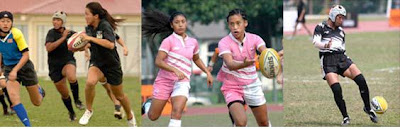

Rugby is a game that is played in over 120 countries throughout the world.

It is a game that requires great athleticism and good psycho-motor skills (the ability to kick, catch and pass, to name some, all whilst running!)


Many of the values of rugby come from its rich history, traditions, camaraderie and community involvement with the sport.


Through non-contact versions of the game, children as young as six (both boys and girls) greatly enjoy rugby. The modified versions of Rugby in Singapore are created for safety and pathway development, including touch rugby, tag rugby, mini rugby.


Rugby is played both as a 15-a-side game, and is also very popular as seven-a-side. Seven-a-side rugby is a fast-paced and popular form of the game that allows for players to make explosive lines of run and is great entertainment to watch.


Values of the Game


Rugby Union is a game that develops leadership, team spirit, courage, sportsmanship, and friendship.

These values and traditions develop from the first time a young player shakes hands with their opposite number, leading to a life long passion for and involvement with the game at all levels.
The key values of the game of rugby consist of pride, teamwork and camaraderie, love of the game, and tradition and heritage.
Teamwork and Camaraderie - Rugby is unselfish and focused on team play achievement. Its rugged nature is balanced by the concepts of fair play, sportsmanship, fun and ultimately friendship. This can be experienced at any age, any level and anywhere - on the field or in the stands.
Love of the Game - Rugby engenders an abiding passion - an intensely personal pleasure in playing or watching. It creates an unaffected joy.

Tradition and Heritage - The ethos of rugby has shaped a code of behaviour that has transcended generations since 1823. It's time-honoured legacy creates a broader social environment for the sport that engages the family and community and strengthens the ties that binds everyone involved in rugby together.


Women's Rugby


Women's rugby is one of the fastest growing women's sports in the world and all over Asia. The International Rugby Boards’ Women’s Rugby World Cup was first played in 1991 and sees so many countries eager to participate; qualifiers have to be held before only the 12 top ranked countries may play in it.

In Asia, 18 countries such as Hong Kong, Japan, Thailand, Sri Lanka, Saudi Arabia, Arabian Gulf, Kazakhstan, Philippines, Guam, China, Uzbekistan, and Kyrgyzstan have been active in women’s rugby for the past 10 years. Countries such as Cambodia and Laos have also started playing rugby union.

Singapore
Women’s rugby has been actively played in Singapore since 1996. There are several active women’s clubs in Singapore and at a national level, Singapore has both a Women’s 15s and 7s squads, which participate in various international tournaments every year including the Hong Kong Women’s 7s, Asian Women’s 7s Championships, Asian Women’s 15s Championships.

Singapore’s National Women’s 7s Team first started in 1998 and achieved its first milestone in 2004 was when the team came in 2nd in Asia.
  • The 2004 squad was awarded the Senior Team Merit Award by the Singapore National Olympic Council for their achievement.
  • In 2007, the 7s team won the Silver Medal at the 24th SEA Games in Korat.
The National 15s Team made their debut appearance at the Asian Women’s XV Championships in 2006 in Kunming and rocked the Asian tournament by nearly beating Japan in the 2008 in the 2008 event in Kazahkstan.


The 2007 Introduction of Rugby to Girls’ Programme
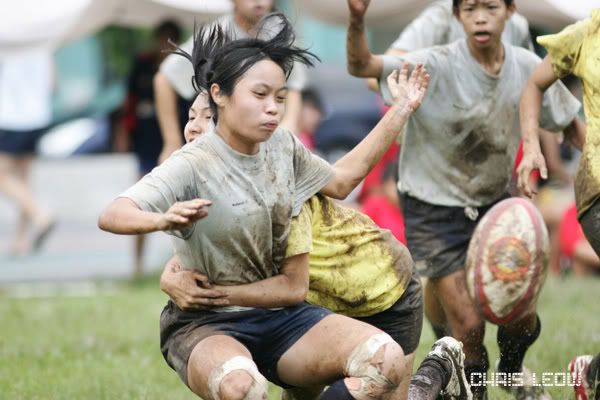

In March 2007, modified Rugby Union was introduced to girls in 7 polytechnics and junior colleges. Over 120 girls participated in the Singapore Rugby Union’s Girls’ 7s Carnival in May 2007.


Girls who are part of the phase 2 programme will go through six sessions which will further develop their knowledge of rugby union which is played in the 7s format – where players are encouraged to avoid contact situations through speed, agility and tactical plays. The detailed programme is attached in this guide.

The girls under this programme also had the opportunity of pitting their skills against school teams from Thailand in August in the Blacks Girls’ Rugby 7s 2007, a tournament for players in the under 20 age group.


Frequently Asked Questions


What if I have never played rugby before?


Rugby requires specific skills just like any other sport. In fact, some of our best rugby players started playing other sports first and then converted to rugby. Skills learnt in any other sports will help you learn the basic rugby skills and allow you to quickly adapt to the new game.


Do boys and girls play together?

Girls and boys can play together in Mini rugby up to and including the age of 11. After that the physical differences prohibits mixed teams, so girls continue to play on in girls only competitions. After school, many women enjoy playing rugby in club competitions.


I though you had to be big to play rugby?
No. Rugby requires many varied body shapes and sizes to play the game. From shorter, strong front rowers to tall far reaching second rowers and the fast, nimble outside backs. There is a crucial position for everyone in rugby.


Isn't Rugby Dangerous
Rugby is a contact sport. It is therefore critical that correct tackling techniques are coached and learnt, so that all shapes and sizes coming into contact with each other can tackle in a safe and correct manner.


Everyone on coaching panel in SRU is trained under the SmartRugby program. The SmartRugby program ensures that all coaches and referees are skilled in the correct techniques to develop confidence in contact amongst their players/members.

Coaches are required to cover this material in on-field sessions to players prior to the commencement of each season. Referees are required to understand the material and apply to the management of all games.


The techniques learnt are built into regular training and playing throughout the season, so that SmartRugby becomes an integral part of coaching and refereeing at any club, school or association.


The SmartRugby is a program implemented in the most established rugby unions all over the world.


But still, I’ve seen rugby and TV and there are plenty of people running into one another and piling on top of each other!


More often than not rugby that is televised is the 15s format of the game, which is far more technical positionally than the 7s format that you will be learning under the SRU programme. In the 7s format, there are half the number of players on the same size playing field, therefore the aim of the players is actually to minimize contact situations by passing the ball and changing running lines to confuse the defence.


Do injuries occur frequently in Rugby?

Contrary to popular belief, rugby is not the sport with the highest rate of injuries. Studies have shown that traditionally female-oriented sports like cheerleading, gymnastics and netball have a higher, if not, similar rate of injury.


The point to take home is that, injuries are part and parcel of any sport (especially when played competitively) and occur most often when a person is either not conditioned for the sport of when their technique is imperfect. This is why SRU places a strong emphasis on building the basic techniques through the proper training of its coaches who in turn will pass these skills on to the players.


What gear do Player’s need before they play the game?

Mouth guards and football boots are the major requirements. Additional padding includes shoulder pads, head gear and shin pads which are optional. All the girls who are part of SRU’s programme will be required to wear mouth guards.


Who are the coaches?

The coaches of the SRU’s Introduction to Contact Rugby for Girls are all female and are members of the National Women’s 7s and 15s Squads. They are all International Rugby Board certified coaches and have had many years of experience in both playing and coaching.


What players have to say


Rugby’s stereotyped reputation as a violent contact sport has always been a deterrent for most who have never had the honour of experiencing it. However, having been a rugby player in Women’s contact rugby for the past ten years now, I believe that rugby is so much more than just a game.
My time in the sport has been and is still a very meaningful and humbling experience. Besides getting opportunities to travel to places such as Australia and Qatar among others, playing rugby has enhanced and matured my personal growth and even taught me valuable life skills. Being part of a team builds character and imparts important qualities such as perseverance, determination, responsibility and teamwork.
Perhaps the most memorable aspect of being in a rugby team is the lifelong bonds of friendship which are forged in sweat, trust and spirit. On and off the pitch, the camaraderie built is enduring and it is also an excellent feeling to know that in both good and bad times, you have thirty close friends who you can depend on. Of course not forgetting the direct benefits of a healthy body and mind, rugby is indeed not merely a sport not just a game; rugby is a way of life.
Aslinda Abdullah, 25, Teacher
(National W7s 2007 Team Captain) Playing experience: 11 years

-------------------------------
"I first started playing rugby as an undergraduate and despite my family’s initial misgivings, they have come to understand that with proper instruction and coaching, rugby is a safe sport. As a testament to his support, my father, a dental surgeon, makes me a new mouthguard every season!


While rugby is still widely believed to be a rough and tumble sport, if you look beyond that, you will realise that it’s a game that trains many facets of your development as a person – keeping a clear mind to make decisions under pressure, learning the true strength of teamwork, staying calm and showing you what you are able to do when you put your heart into it. These are some of life’s greatest lessons and they have definitely helped me face challenges in all other aspects of my life. I am glad to have the opportunity to play and continue to grow from my experiences on the field."
Karen Yeoh, 28, Associate Director, Legal Counsel, UBS Investment Bank
(National W7s & W15s Player) Playing experience: 7 years
------------------------------

I started playing a modified form of rugby in Primary 4 and I joined a rugby club when I was 12 years old. Since then I have been participating in various overseas tournaments with the club and also made the cut for the National Teams.

I have definitely grown up faster than my peers and I've learnt things that cannot be found in text books. I can proudly say that my teenage years have been meaningful. I do think about what I would be doing now if I didn't play rugby. Maybe hanging around with my friends in orchard road every Sunday? I still do some typical teenage things, like watching movies, going to arcades, but not as often as my friends. Because I have commitments, training and such, I need to prioritise more.
Tan Hui Juan, 19, Student
(National W7s & W15s Player) Playing experience: 9 years


---------------------------------------------


My first taste of rugby came when I was in my final year of university in Australia. Unlike Singapore, contact rugby is a thriving part of the female sporting scene in Australia. Completely intrigued by the physical and mental demands of this sport, I stuck to it. I joined a local rugby club in Singapore and have been playing rugby ever since. The past 3 years playing rugby has been an incredible journey during which I have learnt a great deal about teamwork, discipline, and determination.


Xu Lin, Olivia, 25, Research Officer, A*Star Research Institute
Playing experience: 3 years
----------------------------------

For me, what has changed from being a runner to a rugby player is not just the physical aspect of a contact sport, but also a psychological awakening as a sportsperson and an individual away from the pitch.

Whilst running also demands discipline and commitment (as with every other sport), but in a game where you don’t call your own time-outs and substitutions, you are forced to play above yourself, according to the clock, according to the referee’s call, with each heartbeat and breath of your teammates on the field.

This is when an individual grows, in loyalty, self-belief, determination, perseverance, and discipline. These traits aren’t acquired overnight or over one grueling session, but nurtured with successive training sessions as a team where we spur one another on to better our best, and with successive matches where we become bigger and stronger players than we could ever realize.

The best part about rugby is that it was never meant to be a solitary affair, defeat is not the burden of a sole player and glory is not attained by a single effort, I know I am never alone. This is where my greener pasture lies (especially in good weather.)

Amanda Teo, 19, Student, National University of Singapore
(National W7s player) Playing experience: 1 year
------------------------------------

I’ve always wanted to try rugby since I saw it being played by my male classmates during my Temasek Junior College days. The opportunity came when I was taking my undergraduate degree at University of California Berkeley and I wasted no time in joining a rugby club when I returned to Singapore.

I think it’s fantastic that rugby is being introduced to girls in schools now because girls in my time did not have that chance. Rugby has become more than just a hobby for me. It is something that I look forward to outside the sphere of the working world. The friendships that I have made on the field will last me a lifetime. Most importantly, through the nature of the trainings and competitions, I’ve learnt that if you put your mind to something, nothing is impossible and this is a belief I have applied to every other aspect of my life.
Ailei Tandean, 28, Associate, JP Morgan
(National W15s Player) Playing experience: 5 years

Is rugby a safe sport...

Is rugby a safe sport for America’s youth?
by Lyle J. Micheli, MD

Commentary by a past president of the American College of Sports Medicine

I support efforts to establish rugby teams in American high schools and colleges, and wish to alleviate any possible concerns about the sport’s relative safety.
I think I offer a unique perspective on the subject given that:

• I have been closely involved in rugby as a player and supporter since the early 1960s when I began playing the sport as a Harvard undergraduate, and

• I am a physician who is a past president of the American College of Sports Medicine; I am the author of over 200 scholarly journal articles on sports medicine (including the first-ever published study of rugby injuries in the United States); in my practice I have treated athletes of all ages from sports as varied as figure skating and football; and I am the chairman of the Massachusetts Governor’s Council on Physical Fitness and Sports.

A popular sport worldwide

Rugby is a dynamic contact sport that is played all over the world by men and women of all different classes, creeds, and races. It fosters friendship and camaraderie between players. To celebrate one recent Christmas, men from the American and New Zealand research stations in Antarctica played a game of rugby against each other on those southernmost frozen wastelands. Most rugby players have played with and against people from other nations.

Rugby is played in over 100 countries and is the most popular team sport in nations such as Japan, Fiji, and Wales. This sport could not be as popular as it is among the peoples of so many different cultures if it were dangerous! In fact, the risk of injury in rugby is relatively low compared to sports Americans embrace – such as football, ice hockey, and lacrosse - a fact borne-out by numerous studies to ascertain the risk of sports injury in different
activities. The reasons for this are quite straightforward to those of us who study sports medicine.

Why rugby is a safe sport – paradoxically

The main reason rugby players have a relatively low risk of injury compared to football players is paradoxical – rugby players don’t wear protective equipment. Thus the rugby player doesn’t have the same disregard for the safety of his or her head, neck, and shoulders when tackling or trying to break through a tackle. The other reason is that unlike football, rugby is a game of possession, not yardage. Consequently rugby players don’t tackle by "driving through the numbers," as football players are taught to do with their heads when tackling a player. In rugby, players are taught to use their arms to wrap a player’s legs and let the momentum of that player cause him to go to ground. Furthermore, in rugby there is no blocking, and so players who don’t have the ball don’t get hit when they’re not expecting it.

One of the reasons rugby has a reputation for being "dangerous" in the United States is because when the average American sees rugby being played, he or she sees a free-flowing contact sport. Because it doesn’t have the familiar stop-and-start character of football and other TV-shaped sports, to the uninitiated rugby can appear confusing and "scary."

Furthermore, while the bumps, bruises, and scrapes you see on the elbows, knees, and faces of many rugby players can appear alarming, they are of considerably less concern than the anterior cruciate ligament ruptures, finger fractures and dislocations, and chest contusions characteristic of a sport such as football in which heavy protective equipment is worn.

Injury rates

I performed one of the first studies of rugby injuries in the United States, which showed that compared to football, the incidence of injury in rugby is quite low (10 percent in American club rugby compared to 52 percent in NCAA college football). My study was published in the peer-reviewed American Journal of Sports Medicine. Subsequent studies have supported my results.
It would be disingenuous to suggest that rugby players never get injured. However, based on the numerous studies that have been done, the scientific conclusion we must reach is that rugby is not as injurious as certain other contact and collision sports that most of us believe deserve NCAA status, and is a relatively safe sport in the panoply of athletic endeavors available to our young men and women.

Since the early study I did, sports medicine has grown as a specialty and there has emerged a considerable body of literature on the safety of all sports, including rugby. If you review the literature you will find no evidence to suggest that rugby should be denied a legitimate place in high schools and colleges around the world.

For all the reasons outlined above, I have no hesitation based on my personal and professional experience to declare that rugby is worthy of a place in American colleges and high schools.

Dr. Lyle Micheli is director of the Division of Sports Medicine at Boston Children’s Hospital and an Associate Clinical Professor of Orthopaedic Surgery at Harvard Medical School. He is a past president of the American College of Sports Medicine and currently serves as chairman of the Massachusetts Governor’s Council on Physical Fitness and Sports. Dr. Micheli is chairman of USA Rugby’s Medical & Risk Management Committee.

Dead Leg Recovery

Speed up dead leg (Charley horse) recovery

A very common rugby injury is a dead leg also known as a “Charley horse”. This is where a muscle is crushed against the bone. Good recovery management can help a player return faster to training and playing.

Immediately: Apply ice to the bruise. Either use a medical ice pack directly onto the area, or frozen peas/crushed ice in a plastic bag (but use a cloth as well to prevent frostbite). 10 minutes on, 10 minutes off for as long as possible, though practically probably about an hour.

Later on: If moving the leg is possible and there is only some discomfort then gently stretch the muscle. Apply some very light massage, but if the pressure causes pain then it is best to stop. Consult a sports injury specialist if there is more serious pain and discomfort. If this is the case, it is important to use crutches and reduce the amount of weight on the damaged leg until you can seek medical opinion.

Back to training: Attempt training once the knee can be bent more than 90 degrees. Otherwise running will employ other muscles to protect the leg, leading to damage elsewhere.

VB WNRC 15s 2007 Stats

VB Women's National Rugby Championships 2007 Statistics


15s Positional Knowledge

NWT 15 a - side Rugby Skills & Positional Knowledge 2007

Individual skills that every rugby player should have:

Fundamental Skills
Contact Skills

Ball Retention skills

  1. Passing
  2. Catching
  3. Running
  4. Kicking
  5. Tackling
  1. Bump
  2. Hand off
  3. Pop, Put, Place
  4. Clearing out
  5. Hit & Drive
  6. Deck & Place
  7. Staying Strong for Maul
  8. Rip & Go
  9. Off loading in contact
  10. Backs must Make Gain Line
  1. Double bang
  2. Hammer
  3. Rucks
  4. Mauls
  5. Staying Strong – Buy time
No 1 – 15 Positional Skills and Proficiencies
Front Row
No. 1: Loose head Prop
  • Scrum techniques – Good Body Posture
  • Lifting techniques
  • Mauling skills
  • Pick & Go
No. 2: Hooker
  • Scrum techniques – Good Body Posture
  • Hooking
  • Throwing (Should be able to throw straight at a distance of 15-30m)
  • Controlling of scrums
  • Calling calls
  • Sets the height of the scrum.
  • Low/straight hit
No. 3: Tight head prop (A Specialist roles)
  • Scrum techniques – Good Body Posture
  • Leading hit in scrums. Turn-over the scrum.
  • Stealing balls and making life difficult for opposition hooker in scrums
  • Reading opposition hooker’s tap in scrum.
50% of the possession comes from the front row.
All 3 players have the same attributes.
No. 1 is slightly taller and No.3 is slightly shorter.
No. 3 will lead the hit.
Scrum Binding psychology
  • Think about the bind being a quick and efficient process. Therefore be comfortable with the system of binding and work easily with co-players.
  • Two pillars, two props – the props providing a stable platform for hooker to support themselves. If the hooker is not comfortable, then rethink the binding. The higher the bind, i.e. where the hand grips the shirt, the more it keeps the hooker square.
  • Locking the hand in: put the hand into the shirt and then twist to get a strong bind.


    What is a good step by step way to bind for a strong scrum?
  1. Hooker gets into position first.
  2. Normally loose-head binds first onto hooker:

    – approach the hooker from behind
    ,
    reach around, grab shirt; arrive into position.
  3. Tight-head bind:

    – arrives from behind,
    reaches in and grabs lower than loose-head,
    – arrives into position.
Good practices for stronger binding
  • Grip work practices: Squeezy weights, such as handgrips or dumbbell Forearm Grips, which can be used by front row players when they are not having team training.
  • Try out different binding positions on the hooker for maximum strength. Different body shapes might mean different binds.
What are the benefits of good binding?
  • It is where the strength comes from: if you split the front row then you lose the focus of power; second rows have nothing to push against.
  • Improves the freedom of movement for the hooker.
  • Give the 2nd rows a more solid base from which to push.
  • Props are holding the hooker up: if the hooker is not held securely he would be unable to strike the ball because he would fall over.
Locks/Second Row:
No. 4 and No.5
  • Jumping skills (L/O)
  • Staying Strong in the air
  • Scrum techniques – Body Posture
  • Pick & Go from base
  • Mauling skills
  • Mirco-unit skills
Specific Roles:
    • 2nd Row are usually taller players
    • Must have strong core to contest for ball in the air
    • They are the 2nd wave in defence & have to be very stroing going into breakdowns
    • They are the workhorses of the team, sometimes rarely touching the ball in general play
    • They are also involved in cover defence
The least recognized players in the game, but the true workhorses of the team. 2nd rows must be hardy and tough. They must have good aerial skills to dominate the lineout and out think opposition in attack.
A good Jumper will look to both attack & deny air space to their opposition in the lineouts.
Back Row - Looseys/Flankers:
Back rowers have to be:
Quick & Smart, able to read the game well and stop opposition attack off the base of scrums.
Should possess excellent tackling & turnover ball skills
Must have good ball handling skills and ability to link up with backs on attack
No. 6
No. 7
No.8
Scrum techniques
Scrum techniques
Scrum techniques
Channel 3 – protect 9
Awareness in scrums – Eyes on Ball
Awareness in scrums
Support in attack - detach backwards and chase around
Support in attack- Lateral line of run to 1st ruck
Support in attack
Cover 7 inside.
Shoot for oppo 9
Cover 10 inside.
Cover Backline in Defence – runs behind inside backs
Drop back to cover one wing when the other wing goes up.
Chase down oppo line & effect hit
Pilfer the ball
Ball Pilfering Skills
Ball retention on contact
Vision
Chase stand-off in defence.
Control of Pack
Be the first to every breakdown
Be the first to every breakdown.
Pick and go skills
Jumping + Lifting skills
Linking up with backline
  • No. 7 is to be there in the first hit. If hit is successful, No 6 goes up there to collect the ball.If not, No.6 have to clear up the mess.
  • Ability to pilfer the ball for flankers.
No. 8 - Defence Much of the defensive role of a blindside flanker and defence is applicable to the number 8. Certainly, the first job of the No 8 from scrums and lineouts is to cover the gap between the set piece and the backs. Should the opposition play back into this area then it is the No 8’s job, along with the flankers, to make the tackle. Here the back row should be working together. For example, the No 8 and flanker (usually openside) can work like a pincer, with one targeting the inside and one the outside of the fly half. Another option from lineouts (especially where the pack is strong) is to have the No 8 line up with the backs to cover the fly half. Our fly half then covers their inside centre, etc. Now both flanker and No 8 target the fly half (assuming the ball is not thrown deep to the tail of the lineout), with the backs now able to counter any extra man introduced into the backline by the opposition. Given the possible vulnerability of your lineout to a catch and drive, you may wish to reserve this for play outside your 22. From scrums the key issue is to identify who takes whom from a back row move. My reference is:
  • Attack going right: 9 takes first man round the scrum; 8 second; flanker covers.
  • Attack going left: flanker takes first man round; 8 second.
Leadership Not surprisingly, given the influence the number 8 has, it is an ideal position from which to lead. It can be used to give a player their first taste of leadership and prepare them for greater responsibility in the future, particularly if they have been identified as someone with the potential to lead the whole team.

Decision Maker In many ways this quality is intertwined with leadership, in that a crucial element of leadership is making effective decisions at the right time. (i.e.“What do I/we need to do for this move to succeed?”), to a wider focus that also considers ‘added value’ (i.e.“What can I/we best do in this situation to enhance the team’s performance as a whole?”).
Summary The best number 8’s are probably one of the best players in the team; they can perform most of the functions of all the team extremely well. They also need to be part of the team’s strategy decisions, either as a leader or certainly as a key member of the smaller group of captain and coach. The spine of the team is 2, 8, 9, 10, 15. But 8 must be a thinker and a robust forward that can link up with the backline
D. No. 9, Half Back/Scrum-Halfs. (Specialized training)
Primary job is to LOCATE the ball and pass the ball.
Secondary job is to stabilize the situation by: a) Securing the ball himself b) Directing the forwards to secure the ball
Also known as the ninth forward. Can also go in for the first hit.
  • Clearing pass(10-15m)
  • Box kick (Emphasis not enough – More Practice on own)
    Can be used for T.O. Balls
    Lack of support players in attack (Wings can chase)
    Blocked Channels
  • Lines of run – get to breakdown fast
    How they enter the Ruck? & Primary focus at Rucks?
    They should:
    a) Scan area on the way to breakdown (Look for space to attack & know your options – Blind, open, box kick)
    b) 10 to communicate on what options for 9 / strike
    c) Observe ruck formation & defence formation – Option to communicate with forwards to run on short side
  • Communication (link between forwards and backs) – A need for SAV 9’s to know what to say
  • Commanding in attack & defence (9 needs to comm. With players at breakdown to shift if needed)
  • Game awareness – know what is going on. Experience is crucial here, with sound knowledge of options
  • Superb handling skills - Ambidexterous
  • Decision making: 9 to dictate at breakdowns, and to decide if he can run
  • Can overrule the backline calls depending on situation
  • 9 to control fwds entering a driving maul because this dictates the driving angle of the maul – Directing angles of runs
  • 9 to TELL fwds what to do when things change in attack/defence
Core Skills for Backline - :
a) Timing of run
b) Positioning (Depth/Angle prior to receiving ball)
c) Flying start to chase kicks – Maintaining standard attacking alignment at 45deg instead of a flat line giveaway for opposition to be able to read you
d) 1 loop 2 in oppo 22m – Execution at pace
e) Gap running
f) Line breaks & Ball retention OR continuity (Offloading in contact)
Backline
No. 10: Stand-off/Flyhalf/ 1st 5 eight
Major decision maker of the team.
In a game, test the centres first in a game. See if they can hold our centres.
Test Opposition wingers – Kicking High balls just behind them
Tactical kicking must be spot on – Kick into space (Make opposition either:
    1. Run forward to catch ball (Fullback)
    2. Run backwards to catch ball (In between fullback & Winger)

  • Handling and accurate passing.
  • Communication with back-line and half back.
  • Dictate play – Phases / downtown / Penetrating moves
  • Decision making
  • Kicking
  • Control the style of play
  • Reading of the Game.
  • Lead the line defence.
  • Delayed runs in attack
  • Running Skills
  • Tactical Kicking Skills
No. 12: In-Centre
Must Have - Have the equivalent skills of the flyhalf.
Next General in the line.
  • Tactical kicking
  • Line of runs.
  • Tackling
  • Decoy running
  • Look for gaps (off-loading)
  • Crashing
  • Communication with no.10
  • Line Breaker
  • Stand in for 10
Why No. 12 crashes?
-to straighten up
-to fix the defenders/slow the pace of play.
No. 13: Out-centre
Out centre should have better stepping skills & possess better footwork.
Should be able to play first receiver (Especially in the event that Stand-off and in centre get caught in a break-down situations.
  • Tactical kicking
  • Line of runs.
  • Line Breaker
  • Tackling
  • Decoy running
  • Look for gaps (off-loading)
  • Crashing
  • Communication with no.10
  • Stand in for 10
No.11, No.14: Wingers
Speed Demons of the team, who have to finish well, when they get the ball
High pressure position where they have to think on their feet in nano seconds
Must know how to operate:
  1. Man on Man Defence
  2. Drift Defence
  3. Plug gap Defence
  • Ability to catch high balls.
  • When to switch with 13
  • Timing of run for linking up
  • Composure in both attack & defence
  • Reading of game – and positioning (Crucial Skills – dependent on individual speed & skills)
  • Decoy starting positions
  • Finishing - Clinical
  • Kicking - Tactical
  • Pass a distance of 15-20 m.
  • Depth runner - Coming from a natural deep position.
  • Fielding – Linking with back 3
  • Option runner off 1st wave of attack
No.15: Full back
If our full back has to tackle, it reflects a poor defensive patterns from the backline.
Kicking skills –
Must be able to relieve pressure with tactical kicks
He is also the 2nd Kicker since No.15 is the 2nd nearest to the scrum especially in the red-zone.
Must know how to operate on:
  1. Man on Man Defence
  2. Drift Defence
  3. Plug gap Defence
  • Ability to catch high balls.
  • Composure
  • Reading of game.
  • Decoy starting position.
  • Finishing.
  • Kicking.
  • Pass a distance of 20-30m.
  • Depth runner. Coming from a natural deep position – Must think of linebreak into gaps
  • Fielding (Control of back 3)

Tips for 15s

The principles of a good hand catch
  • Keep the eyes on the ball all the time.
  • Extend the arms, hands and fingers to receive.
  • Use both hands to catch whenever possible.
  • Keep the ball off or away from the chest when receiving it. Only bring it to the chest if taking contact.
  • Do not expect the ball to go straight to hand. Be flexible and adjust.
  • Be prepared to receive a pass at any time. The ball has a nasty habit of leaping around, especially in close quarter situations

How to score more tries as a team
1. Building pressure on opponents by going forward and retaining possession near to their line.
2. Converting more try scoring opportunities in the opposition half


Patience
1. Balance the risks and be patient. Scoring opportunities will come.
2. Take territory in small stages. Don't let up the pressure.
3. Support each other. Never take contact if there is no support.


What to communicate & do:
  • "Communicate where the gaps are"
  • "Always go forward, but keep the ball"
  • "Make flat passes close to the line"
  • "Make shorter passes closer to the line"
  • "Keep your depth in attack" (runners coming from deep are harder to stop)
What to Avoid:
  • Players getting close to the line and then throwing a long pass too far back and losing ground.
  • Players passing to a static, upright player who loses ground or gets turned over in the tackle. Players must maintain low body positions close to line.